09 // CASE STUDIES
Smart City Data Governance Framework

The Challenge
Creating a framework to manage fragmented data across multiple urban sectors (transport, energy, public safety), whilst ensuring privacy and interoperability. While security and compliance are key factors, governance is also a primary mechanism to unlock value and effectiveness of services.
Our Solution
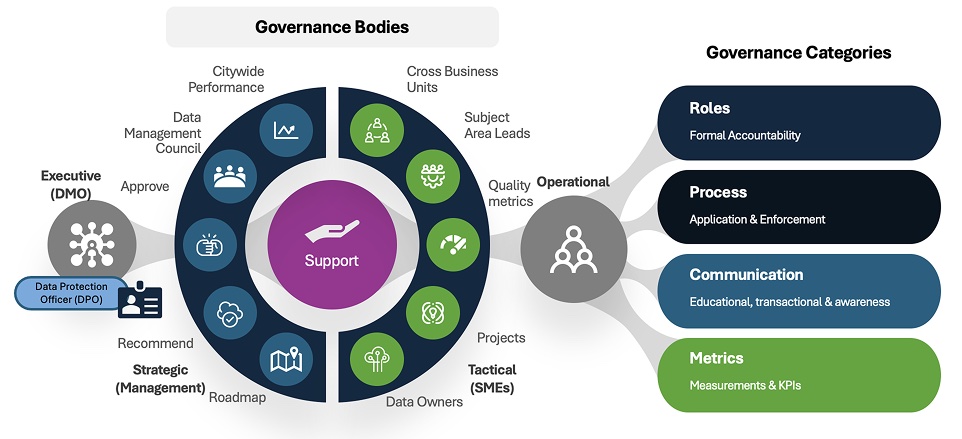
We built a unified governance layer that standardises data formats and security protocols. This included a Data Stewardship Model, a Centralised Metadata Repository and an Operating Model of multiple layers of management.
Key Outcomes
Strategic roadmap and delivery plan for a cutting-edge Smart City project supporting over 40 different Smart Services. Focus area on Residential, Commercial and Industrial areas or support and enablement.
Who benefits?
- Executive Leadership
- Finance and Risk
- Product and Operations Teams
- Legal, Compliance and Security
Cost savings
- Duplicate datasets and tooling
- Manual data cleansing and reconciliation
- Repeated delivery of the same reports
- Compliance remediation and audit overruns
- Failed or delayed data programmes
- Typical outcome: 10–30% reduction in data/operational costs once governance is embedded properly.
Time savings
- Faster circulation of trusted data
- Clear definitions eliminate debate and rework
- Pre-approved access paths reduce delays
- Standard patterns accelerate delivery
- Typical outcome: weeks shaved off reporting cycles and months off major data initiatives.
For any organisation, a data governance framework exists to answer three deceptively simple questions: Can we trust our data? Can we find it quickly? Can we use it safely, repeatedly, and at scale?
Our People involved

Mark Collin
Co-founder & CTO